Showing posts with label North Atlantic Oscillation (NAO). Show all posts

Saturday, December 17, 2011

Solar cycle and North Atlantic Oscillation or a fistful of flakes

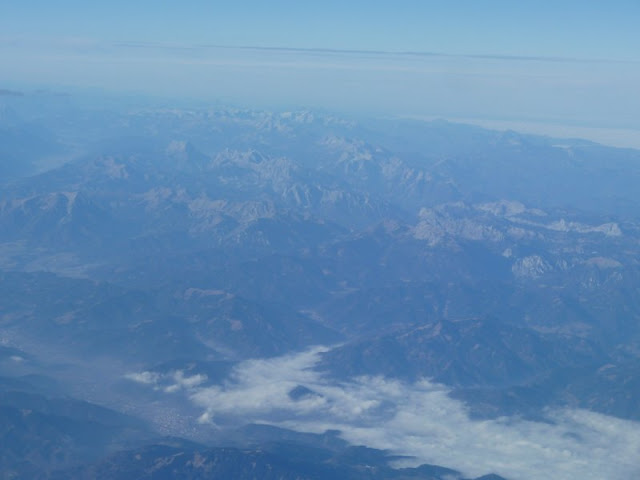
Last winter I did some analysis of North Atlantic Oscillation (NAO) index forecast and what kind of winter we could expect. At the end of the winter 2010/11, I did not perform an objective evaluation of that forecast, but as far as I remember, results were quite satisfactory. However, seasonal forecast is very young scientific discipline, and its results are quite uncertain and qualitative, therefore not reliable in application where you need an exact value, but quite useful as a first approximation. For example to estimate if is a great skiing season ahead of us, and I was quite shocked as I was flying above the bare, snowfree Alpine peaks at the beginning of December 2011. That motivated me to have a look at "the crystal ball" to see what kind of winter we can expect.


Seasonal forecast, especially for winter in Europe is based on NAO index, which is number indicating fluctuations in the difference of atmospheric pressure fields at sea level between the Icelandic low and the Azores high. Not going into much detail, when the NAO index is positive - warm (and rainy in the flatland) winter is to be expected, while negative NAO index indicate cold winter with above average snowfall. Have in mind, things are not that simple, but going into much details is out of scope for this exercise.

Recently published article (Solar forcing of winter climate variability in the Northern Hemisphere) confirms correlations between solar activity and NAO pattern. Predicting the behavior of a sunspot cycle is fairly reliable and according to NASA observation and prediction we are heading towards another maximum of solar activity. Therefore a couple of mild and rainy winters are to be expected during next couple of years.

It is important to note that solar activity is external forcing in climate system, therefore it has nothing to do with observed (global) warming due to anthropogenic activity which is internal feedback of climate system.

Wednesday, December 1, 2010

Winter is back in town

It's a first day of climatological winter, and the coldest 1st of December in Berlin since inception of instrumental measurements. Cold winter is coming indeed, but it does not mean that anthropogenic impact on environment is negligible.

The daily North Atlantic Oscillation (NAO) index, as obtained from the Climate Prediction Center (CPC). Check their web pages for the most recent figure and the methodology.

Internal climate variability - phenomenons such as El Nino, Northern Atlantic Oscillation (NAO), Atlantic Meridional Overturning Circulation (AMOC), are in their phases that favor cold winter. For example NAO negative phase results with increased snowfall above the Scandinavia and Western Europe.
We saw a consistently negative NAO since mid-August (see figure), strong at times, and interupted with positive phase in October (remember "Goldene Oktober" in Germany). Since mid-November we see very strong negative phase (remember I told you Mr. November did not let us down). Forecasters are expecting generally negative NAO to continue through December and probably until mid January with an occasional period of +NAO possible. More frequent exchange of positive and negative phases is expected during second part of January and February. Furthermore some researchers suggest that heat transport between tropical and polar latitudes is reduced due do weakening of Atlantic Meridional Overturning Circulation (AMOC) i.e. Gulf stream does not produce that much heating as it used to due to Greenland ice-sheet melting and decreased ocean thermohaline mixing.